

What makes a city real? Age? Decay? A certain ratio of marble to rust? By most standards, Dubai should qualify: it has millions of residents, functioning infrastructure, economic activity, and culture. Yet people keep calling it fake.
“Dubai is fake” has become almost reflexive, especially among influencers, travel vloggers, and cultural critics. The phrase now functions less as an observation and more as a social performance: a way to demonstrate you’re worldly enough to prefer “authentic” places, which usually means older ones with peeling paint and slower rhythms. It signals sophistication, as if spotting artificiality proves depth of character.
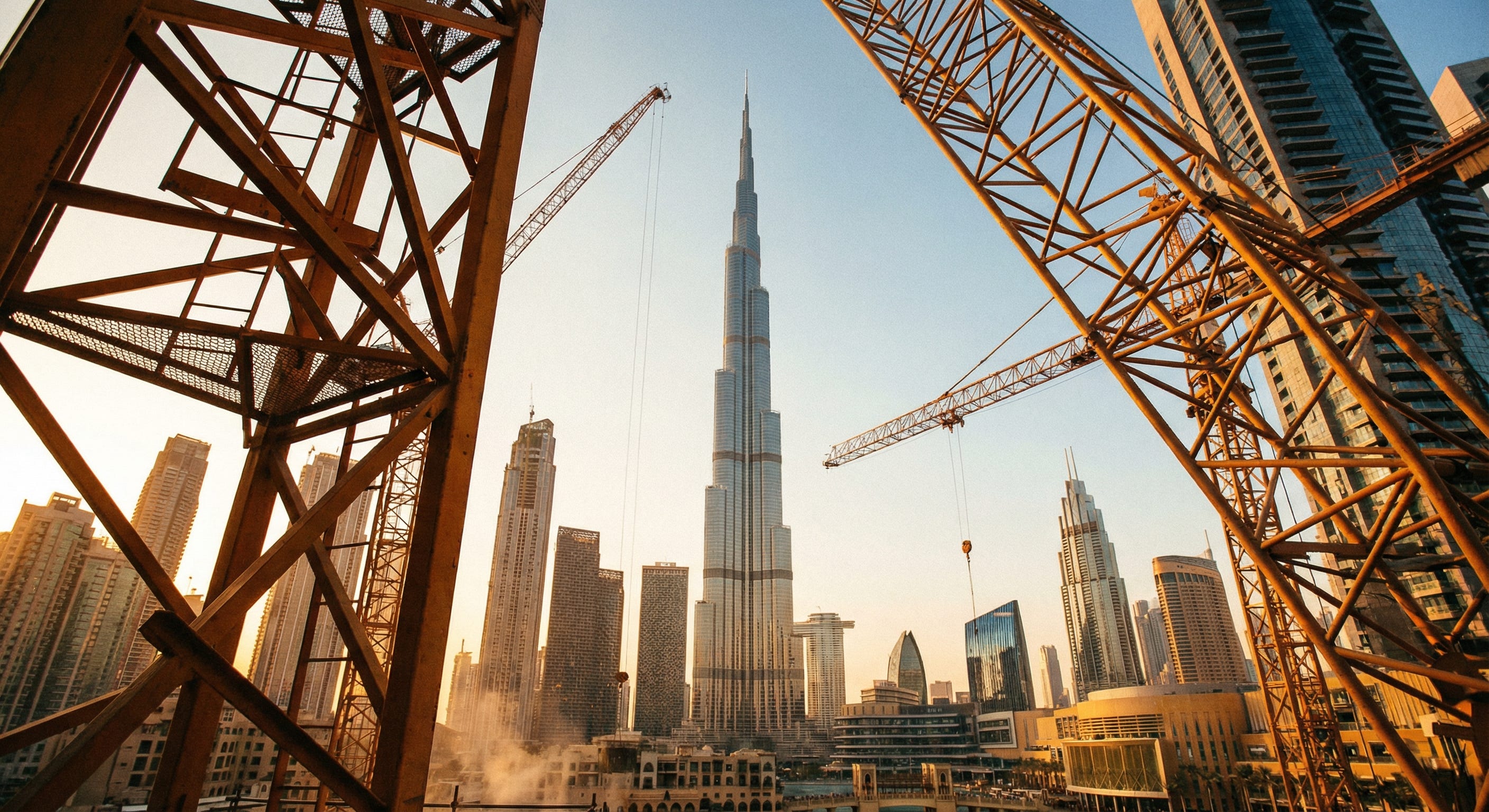
Stand at the base of the Burj Khalifa and look up. Glass, steel, ambition made vertical. A shopkeeper from Kerala sells you water. A taxi driver from Pakistan navigates streets that didn’t exist when he was born. Critics point to the luxury hotels that feel like movie sets, the imported workforce building towers they’ll never afford to enter, the indoor ski slope in the desert. They see wealth cosplaying as culture. No ancient quarters, no castles, or decades-old chic avenues . They look at Dubai and all they see is just an army of cranes along Sheikh Zayed Road lifting steel into a skyline that didn’t exist a generation ago.
But I would like to suggest that the statement reveals more about the speaker than about the city itself. When someone calls Dubai fake, they’re really saying: “This makes me uncomfortable.“ The city built too fast, accumulated wealth too quickly, and skipped the centuries-long process that grants other places the appearance of authenticity. But speed doesn’t equal falsehood. Every city you consider authentic was once exactly like Dubai. The difference is you weren’t there to watch it being built.
Accelerated Modernity
Some high-paced cities make people uncomfortable because they break an unspoken rule: that modernity should arrive slowly. The city built in 40 years what others took centuries to develop. It didn’t wait for nature, time, or decay to grant it character. It skipped straight to the skyline. That speed feels suspicious to those who equate worth with age.
When people say “Dubai is fake,” they’re really expressing anxiety about modern life: about construction outpacing culture, about wealth overtaking history, about ambition untempered by tradition. Yet they conveniently ignore that every place they now praise for its charm was once accused of the same thing. Paris was mocked as sterile and artificial after Haussmann demolished its medieval neighborhoods and rebuilt it with geometric precision. Manhattan was criticized as soulless steel, a grid of commerce without culture. Venice was once reclaimed marshland, an audacious engineering project that seemed to defy nature itself. New York was once a commercial colony, criticized for its crass mercantilism. Las Vegas was dismissed as gaudy excess. Even the beloved neighborhoods of Barcelona were controversial modern interventions into an older cityscape. Everything old was once aggressively new.
The city’s real transgression is that it’s happening now, in real time, in full view. The city serves as a laboratory for what the world looks like when ambition no longer apologizes for itself. That visibility is precisely what makes it different. The unfinished nature of the place makes us deeply anxious.
“Authentic”?
Dubai represents the visible process of becoming. Most cities disguise this process with age. They had centuries to grow into their myths, to transform construction sites into heritage sites, to let time smooth over the rawness of their origins. Dubai hasn’t had that luxury yet. The concrete is still wet, the glass still gleaming, nothing yet weathered into stone.
Walk into any corner shop in Deira and you’ll meet someone from Kerala or Karachi who arrived five years ago with a plan. The city is full of people mid-transformation, mid-ambition, mid-reinvention. This visibility doesn’t make the place artificial. The process just hasn’t been hidden yet.
Those who crave the “authentic” usually mean “old.” They want cracks in the wall, stories passed down through generations, the comforting illusion that a place has always been there, emerging fully formed from history rather than from human ambition and capital.
Reality in Progress
Dubai’s supposed “fakeness” is simply what authenticity looks like before it hardens with time. The city shows us the real in progress, the real before nostalgia has done its work of smoothing edges and obscuring origins. Dubai refuses to pretend that places emerge organically rather than through deliberate acts of construction and capital.
Perhaps Dubai bothers us because it forces us to confront an uncomfortable truth: the places we romanticize were also once new, also once purely commercial, also once accused of having no soul. We want cities to feel organic, but we also want air conditioning. We crave authenticity, but we appreciate infrastructure. We praise slow growth, but we benefit from rapid development. Dubai simply refuses to hide these contradictions.
The city tells the truth about what it is: a bet on the future, built at the speed of ambition rather than the pace of tradition. Whether that makes you uncomfortable or excited says more about your relationship with change than it does about Dubai itself.
The Verdict of Time
In another fifty years, when the towers have weathered and the stories have accumulated, when today’s audacity has become tomorrow’s heritage, Dubai will likely be praised for its authenticity. The immigrant who arrived with nothing and built a business will become a founding myth. The cranes on Sheikh Zayed Road will be remembered as symbols of an era. The artificial palm islands will be historic landmarks.
I suspect that the only thing that will have changed is time and our willingness to forgive a city for once being new.
Dubai isn’t pretending. We are.
Compare if similar claims are maid about Las Vegas or Singapore.